
Credit for Prior Learning (CPL) Implementation & Sustainability Guide for Colleges
This guide is designed for all campus professionals involved in Credit for Prior Learning, including faculty, CPL leads, counselors, Veterans Resource Center staff, and Admissions & Records evaluators. It provides clear guidance, tools, and best practices to support consistent, CPL implementation across the California Community Colleges system. The goal is to help colleges award credit accurately, equitably, and in alignment with statewide policy and student success priorities.
Implementation and Sustainability Guide Chapters
About this Guide
Purpose of this Guide
Credit for Prior Learning (CPL) is an essential and forward-looking strategy in California’s higher education system, designed to recognize and validate college-level learning that students have acquired outside traditional classroom environments. Whether gained through military service, workplace training, industry certifications, apprenticeships, or lived experience, CPL provides students—especially working adults, veterans, re-entry learners, and career-focused students—an opportunity to receive academic credit for the skills and knowledge they already possess.
CPL directly supports the goals of Vision 2030, which calls on the California Community Colleges to expand access, accelerate degree completion, and close persistent equity gaps. By reducing unnecessary repetition of coursework, CPL shortens students’ time to completion, lowers educational costs, and increases momentum toward certificates, degrees, and transfer. Research consistently shows that students who earn CPL credits are more likely to persist, complete more units, and reach their academic goals at higher rates than peers who do not receive CPL.
This guide provides colleges with a comprehensive, practical framework for designing, implementing, expanding, and sustaining high-quality CPL programs. It draws from the statewide 2025 Credit for Prior Learning Handbook, Title 5 requirements, ACCJC standards, federal VA expectations, and best practices observed across California’s 116 community colleges. It also incorporates lessons from the CPL Veterans Sprint, regional MAP workgroups, and early-adopter colleges that have successfully scaled CPL opportunities across multiple disciplines.
A central component of this guide is the integration of the MAP (Mapping Articulated Pathways) Platform, California’s statewide CPL technology solution. MAP allows colleges to evaluate military and industry learning, build faculty-approved articulations, share agreements across the state, and maintain a consistent, equitable CPL infrastructure. By leveraging MAP alongside strong local policy, faculty leadership, and clear student services processes, colleges can dramatically expand CPL access while ensuring academic integrity and transferability.
Whether your college is just beginning its CPL journey or strengthening existing systems, this guide provides the tools, examples, and strategies needed to build a sustainable CPL ecosystem, from early planning and foundational structures to long-term institutionalization. When implemented effectively, CPL becomes much more than a policy: it becomes a student-centered practice that honors experience, accelerates opportunity, and supports a more equitable future for California’s diverse learners.
1.1 Acknowledgements
As we continue this transformative journey together, we celebrate the remarkable progress already made in advancing Credit for Prior Learning across California’s Community Colleges. Your dedication has helped thousands of working adults, veterans, and apprentices turn their lived experience into academic and career success. Through your leadership, collaboration, and commitment, CPL has grown from an initiative into a movement—one that continues to strengthen equity, access, and opportunity statewide.
The impact of this work is both clear and expanding. Together, our colleges have created an estimated $600 million in student and state savings over a 20-year period, directly benefiting more than 30,000 learners. These results are a testament to your innovation, dedication, and persistence, demonstrating that when we recognize and value all forms of learning, we truly transform lives, families, and communities. Now, as we move forward, our focus turns to sustaining and expanding this work.
Together, we must continue to:
- Empower faculty to refine and scale CPL practices with confidence and consistency.
- Integrate student services to ensure learners receive the guidance and recognition they deserve.
- Strengthen partnerships with workforce and industry to align learning with real-world needs.
- Share insights and strategies across colleges, growing our statewide community of practice.
- Leverage MAP Initiative support and tools to deepen institutional impact.
This next phase is about continuity, embedding CPL as a lasting element of student success and institutional excellence. Each meeting, each course review, each student supported moves us closer to a more inclusive and equitable higher education system.
Thank you for your continued leadership, innovation, and dedication. Together, we are not only sustaining the work, we are shaping the future of learning in California.
Dr. Samuel Lee
Senior Advisor to the Chancellor, Credit for Prior Learning
Terence Nelson, MEd MS
Director of Academic Programs and Institutional Partnerships
1.2 Funding Acknowledgment
This work is made possible through funding from the California Community Colleges Chancellor’s Office, with support from both $15 million in one-time funding provided through Assembly Bill (AB) 131 and $5 million in ongoing funding established under Senate Bill (SB) 101.
These investments reflect the state’s strong commitment to expanding educational opportunity and recognizing the diverse learning experiences of California’s students through the Credit for Prior Learning Initiative. We extend our sincere gratitude to the Chancellor’s Office and to the many faculty, staff, and partners across the system whose dedication, expertise, and collaboration continue to advance equitable access and student success through CPL.
© 2025 California Community Colleges Chancellor's Office. All rights reserved. For more information about statewide CPL initiatives and resources, visit https://map.rccd.edu.
1.3 The MAP Initiative
The California Community Colleges Chancellor’s Office has launched an ambitious initiative to expand Credit for Prior Learning opportunities across our system by 2030. This effort, led by the Mapping Articulated Pathways (MAP) Initiative, aims to recognize and validate the diverse learning experiences of our students, particularly working adults, apprentices, and veterans.
Our 2030 vision is to develop college capacity and procedures to ensure that at least 250,000 Californians—including 220,000 working adults and apprentices and 30,000 veterans—receive offers and awards of CPL leading to increased equitable college access, completion, and career attainment. The stretch goal doubles the impact to 500,000. If our colleges had optimal CPL capacity today, the impact could be far greater, with an estimated 6.5 million Californians benefiting by 2030.
- Mapping – Prior learning, skills, and competencies to college courses.
- Articulated – Approvals, awards, adoptions, and alignment.
- Pathways – Developed with embedded CPL for offers, outreach, and opportunities.
Vision
In 2030, the California Community Colleges have the capacity and procedures to ensure that California’s working adults, apprentices, and veterans regularly receive offers and awards of CPL, leading to increased equitable college access, completion, and career attainment.
Goals
Goal 1: Expand CPL opportunities and boost student success for at least 250,000 Californians, including 220,000 working adults and apprentices and 30,000 veterans. Offer or award CPL using 1,000 statewide credit recommendations from 25 faculty/industry workgroups. Achieve 80% of CPL recipients reporting improvements in savings, belonging, well-being, completion, and career prospects, evidenced by data including 500 personal success stories documented in MAP.
Stretch Goal: Serve 500,000 learners, including 450,000 working adults and 50,000 veterans, utilizing 3,000 credit recommendations from 40 workgroups, with 90% reporting improvements across 1,000 success stories.
Goal 2: Build a unified, statewide CPL system that:
- Creates CPL-embedded outreach pathways.
- Enables seamless credit transfer across California higher education institutions and beyond.
- Forges at least 50 industry, agency, and education partnerships supporting CPL.
- Implements a comprehensive credential registry integrating academic and industry-validated competencies into eTranscript and Career Passport.
- Ensures CPL data interoperability and visibility across related systems.
Stretch Goal: Achieve full system integration, 100% institutional participation, and 95% stakeholder engagement with best practices.
Goal 3: Establish clear CPL policies, sustainable resources, professional development, and best practices by:
- Reviewing and revising laws and regulations to remove CPL barriers.
- Implementing sustainable funding models.
- Developing research-based best practices.
- Offering professional and technical assistance to all stakeholders.
- Recognizing high-performing colleges and partners.
Stretch Goal: Eliminate 100% of barriers, secure permanent operational and incentive funding for CPL, and achieve widespread adoption of best practices across all institutions and education and agency segments.
MAP Initiative Strategy
The MAP Initiative provides culture, technology, and policy to help colleges build capacity and procedures to maximize credit for prior learning opportunities for their working adults, apprentices, and veterans—all to flip the petition process into an outreach process and significantly increase equitable access, completion, and career attainment.
Culture: The MAP team meets with colleges to develop a simple implementation strategy, provide training resources, and recommend the business processes and administrative procedures needed to manage CPL for current and prospective students. The MAP team functions like an extension of the local college CPL team and offers support via Zoom, chat, or in person upon request.
Technology: The MAP platform facilitates CPL creation, faculty approval, and adoption (from other colleges); CPL document uploading, parsing, and verification; and student CPL planning (in conjunction with education planning) that allows colleges and students to monitor each step of the way leading up to transcribing credit. It also supports a college-branded website that dynamically displays all implemented CPL opportunities and provides a means for prospective students to contact the college for CPL assistance. MAP is offered at no cost to CCCs and requires no IT set up. All course and program data are integrated from the Chancellor’s Office Curriculum Inventory (COCI).
Policy: The MAP and Chancellor’s Office team convene the statewide CPL workgroup and collaborate with practitioners at the colleges to recommend best practices, administrative procedures, funding resources, and collect feedback from the field on barriers and opportunities needing advocacy and action. The team also meets with policy makers to recommend reforms; intersegmental partners (CSU, UC, and private institutions) to align practices and ensure seamless CPL transfer; and interagency partners to share data and tools designed to make CPL accessible outside the college setting.
Getting Started with CPL
Overview
Getting started with Credit for Prior Learning begins with understanding the core structures, stakeholders, and policies needed to build a strong institutional foundation. This section outlines the essential first steps colleges should take to prepare their teams, processes, and systems for successful CPL implementation.
2.1 Establish Institutional Readiness
-
Review California Education Code: California Education Code §66025.71 requires all public
postsecondary institutions in California to establish and maintain formal policies for awarding academic
credit for military training and experience. Institutions must:
- Develop consistent procedures for evaluating Joint Services Transcripts (JST).
- Ensure policies are transparent, publicly available, and consistently applied.
- Inform military students about credit opportunities and procedures.
- Maintain documentation and ensure appropriate staff training.
-
Title 5 Regulations: Establish the fundamental requirements for CPL in California Community
Colleges. Colleges must:
- Maintain policies and procedures for CPL assessment.
- Grant credit for satisfactory completion of assessment.
- Analyze prior learning for incoming students with industry certification or military learning.
-
Accept credit recommendations from:
- American Council on Education (ACE)
- Defense Language Institute Foreign Language Center
- State Fire Marshal
- Commission on Peace Officer Standards and Training
-
Understand Federal Regulations: U.S. Department of Veterans Affairs regulations
(38 CFR 21.4253 and 21.4254) require institutions to:
- Obtain Joint Services Transcripts for military students.
- Evaluate military education and training experiences.
- Grant appropriate credit where warranted.
- Document evaluation processes and maintain records for compliance reviews.
-
Fulfill Accreditation Standards: ACCJC Standard II.A.10 requires institutions to have
policies and procedures for:
- Awarding credit for prior learning.
- Ensuring the rigor of all awarded credit.
- Maintaining documentation of CPL decisions.
Defining Credit for Prior Learning
CPL is a process that awards students college credit for validated college-level learning gained outside traditional academic environments. It allows students to accelerate their educational pathways by recognizing the skills and knowledge they have already mastered.
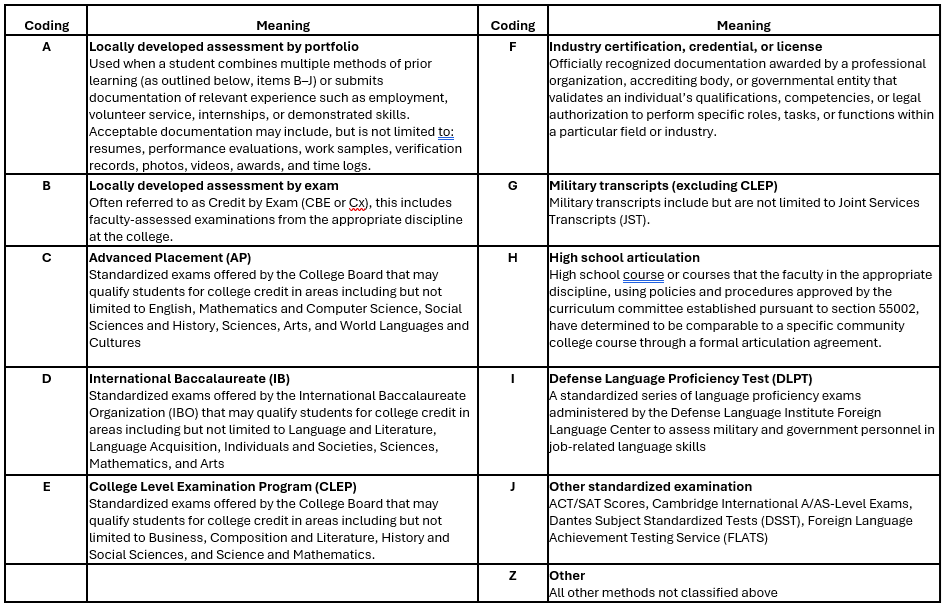
Types of CPL include, but are not limited to:
- Standardized examinations: Advanced Placement (AP), International Baccalaureate (IB), College-Level Examination Program (CLEP), and other standardized exams.
- Joint Services Transcript (JST) credit: Credit recommendations based on military training and experience as evaluated by ACE.
- Industry-recognized credentials: Credit awarded for industry certifications, licenses, or other credentials that align with college-level courses.
- Student-created portfolios: Credit awarded for demonstrated college-level learning from work or other life experiences, assessed through a portfolio review process.
- Credit by Exam (Cx): Credit awarded for passing institutionally approved examinations that assess college-level learning.
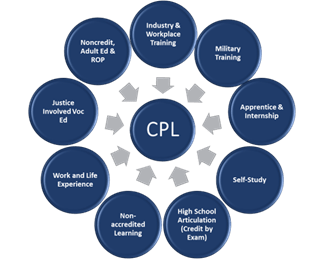
Modes of Learning Associated with CPL
- Military training.
- Industry and workplace training.
- High school coursework via articulation agreements based on credit by exam.
- Noncredit, ROP, adult school, community education, and contract education.
- Apprenticeships and internships.
- Proprietary and non-accredited learning, often state-agency authorized.
- State and federal government training and professional development.
- Self-study, exam preparation, and life experience.
- Justice-involved coursework.
Campus Structures and Roles
- Review and update BP/AP 4235: Ensure policies list all CPL methods (AP, IB, CLEP, JST, industry credentials, portfolio assessment, credit by exam) and comply with Title 5 §§55050–55056.
- Engage leadership and governance: Brief President’s Cabinet, Academic Senate, VPs, deans, Guided Pathways teams, and committee chairs on CPL’s impact on completion and equity.
- Assign a CPL Coordinator: Designate a single point of contact to manage intake, routing, MAP oversight, messaging, compliance, and workflow consistency.
- Create a cross-functional CPL team: Include discipline faculty, counseling, A&R evaluators, VRC staff, Articulation Officer, Institutional Research, CTE/Workforce, and IT.
- Connect CPL to Vision 2030 and institutional goals: Frame CPL as part of adult re-engagement, transfer acceleration, equitable credential completion, workforce readiness, and program efficiency.
Vision 2030:
https://www.cccco.edu/Vision2030
California Roadmap to Shared Prosperity:
https://www.labormarketinfo.edd.ca.gov
2.2 Connecting CPL to Institutional Goals
- Guided Pathways alignment: Embed CPL into program maps, onboarding, orientations, student milestones, meta-major discussions, and early advising.
- Student Equity Plan alignment: Use CPL to support disproportionately impacted populations (adult learners, veterans, foster youth, working parents, low-income students) and integrate CPL metrics into equity planning.
- Strategic Enrollment Management (SEM): Leverage CPL to support enrollment growth among returning adults, experienced workers, and military-affiliated learners.
- Adult re-engagement: Convert prior learning into transcribed credit to reduce repetition and program fatigue for returning students.
2.3 Serving Different Student Populations
CPL enables institutions to recognize and award academic credit for college-level learning gained outside of traditional classrooms. This accelerates degree progression, reduces financial barriers, and honors the expertise of non-traditional learners, including working professionals, military personnel, and adult students with significant prior learning.
The Importance of Industry Certification Crosswalks
-
Recognizing relevant industry credentials:
- Industry certifications, licenses, and credentials represent occupation-specific learning.
- Clear crosswalks between these credentials and courses allow efficient evaluation and credit awards.
-
Aligning with workforce needs:
- Recognition of industry credentials helps align academic programs with employer needs.
- Students apply their prior learning toward meaningful, in-demand degrees and certificates.
-
Streamlining the CPL process:
- Predefined crosswalks reduce burdens on students and faculty evaluators.
- Students and assessors can more easily map credentials to course equivalencies or outcomes.
-
Promoting transparency and consistency:
- Public crosswalks provide clear guidelines on how credentials translate to credit.
- Consistent application supports equity and fairness in CPL evaluation.
2.4 Defining Clear Processes
- Map your workflow: Outline steps from student inquiry to evidence submission, faculty assessment, evaluator transcription, SEP update, and student notification—assigning ownership and timelines at each step.
- Develop user-friendly forms: Create simple, mobile-friendly CPL request forms and portfolio templates that guide students to connect experience to course-level learning outcomes.
- JST and credential workflows: Provide guidance for veterans on authorizing JSTs and define how documentation is submitted and routed internally. Leverage CCCApply authorization to request JSTs.
- Transcript notation standards: Use consistent codes (for example, MIL for military, IND for industry credential, PL for portfolio, CX for credit by exam) to support recognition by CSU and private universities.
- MIS reporting integration: Record CPL using SY02 (method) and SG01 (credits awarded) for Chancellor’s Office reporting, equity analysis, and Vision 2030 tracking.
CPL Data Element Dictionary: https://webdata.cccco.edu/ded/sy/sy_all.pdf
2.5 Providing Foundational Training
-
Faculty training: Introduce faculty to ACE recommendations, industry crosswalks, JST
structures, MAP tools, evaluation rubrics, and regulatory expectations. Include sample evaluations to build
confidence.
ACE National Guide: https://www.acenet.edu - A&R evaluator training: Reinforce best practices for transcript codes, documentation, audit files, MIS reporting, residency rules, and degree applicability.
-
Counselor training: Ensure counselors understand how CPL affects pathways, residency,
GE applicability, ADT progress, and transfer planning; encourage early questions about prior learning.
MAP Counselor Hub:Counselor Resources Hub
-
VRC training: Train Veterans Resource Center staff on JST authorization, ACE coding,
MOS/AFSC interpretation, and strategies for helping students obtain documentation.
JST access: https://jst.doded.mil/jst/login?returnTo=%2Fhome
Building CPL Infrastructure with MAP
Overview
The MAP Platform provides the comprehensive, statewide infrastructure that California Community Colleges need to develop, organize, and scale Credit for Prior Learning (CPL) opportunities. By centralizing articulation development, faculty evaluation tools, and student-facing resources, MAP enables colleges to implement CPL consistently and equitably across programs and campuses.
This section outlines how institutions can leverage MAP to build high-quality CPL articulations aligned with course outcomes, streamline evaluator workflows, and ensure faculty maintain full academic oversight in accordance with Title 5 and accreditation standards. It also details how MAP improves the student experience by simplifying access to information, guiding learners through CPL processes, and reducing barriers to earning credit.
Through MAP, colleges gain a unified system for managing CPL from intake to articulation to transcription, allowing them to expand opportunities, strengthen equity, and scale CPL in a sustainable and academically sound way.
3.1 MAP CPL Dashboard
The MAP CPL dashboard provides colleges with real-time visibility into how students are accessing and benefiting from Credit for Prior Learning. Institutions can track student utilization, CPL awards, unit and cost savings, and trends across programs, disciplines, and demographic groups. This actionable data allows colleges to identify gaps, measure impact, and scale CPL implementation with precision.
The dashboard also supports critical institutional reporting requirements. Colleges can use the data to demonstrate progress on Vision 2030 goals, inform Student Equity Plans, respond to accreditation standards, strengthen Strategic Enrollment Management (SEM) efforts, and document the impact of CPL on veterans as part of Veterans Resource Center (VRC) metrics. By centralizing and visualizing this information, the dashboard helps colleges communicate CPL outcomes clearly to leadership, faculty, and external partners.
-
Per-unit cost savings and fund preservation (illustrative values):
- Working adults: approximately $965 per unit.
- Military-connected students: approximately $1,730 per unit.
-
Projected 20-year impact per unit:
- Working adults: approximately $4,734.
- Military-connected students: approximately $6,067.
-
These calculations consider multiple components, such as:
- GI Bill tuition benefits or state/federal financial aid.
- California Basic Allowance for Housing (for military students).
- Average college living expenses for working adults.
- Textbook allowances.
- Saved apportionment for the college.
-
The long-term impact analysis considers:
- Increased earnings from credential attainment.
- Federal and California tax revenues.
- Productivity and entrepreneurship gains.
- Economic multiplier effects over a 20-year period.
The term “Eligible CPL” refers to units listed in student CPL Plans within MAP. While these units are approved and available to use, students may update their education plans or choose alternative CPL options. As colleges enhance their capacity to record transcribed CPL in both MAP and their Student Information Systems, the dashboard will begin to incorporate transcribed CPL data alongside eligible CPL. The calculations above assume associate degree completion; bachelor’s and graduate-level completion would result in even greater economic impact.
MAP CPL dashboard: MAP CPL Dashboard – Statewide Insights
3.2 MAP CPL Inventory
The MAP CPL Inventory is a statewide repository of CPL opportunities developed and implemented by California Community Colleges. Institutions can view CPL courses and articulations that have been approved at other colleges to identify comparable offerings at their own institutions.
Drawing from MAP data, the CPL Inventory displays articulations once they have been implemented locally, creating a comprehensive resource for cross-institutional collaboration. This centralized database helps colleges:
- Identify potential course alignments across the CCC system.
- Reduce duplicated faculty work by learning from peer institutions.
- Accelerate local CPL development using existing faculty-approved examples.
- Promote greater consistency and equity in CPL recognition statewide.
MAP CPL Inventory: Statewide MAP CPL Inventory
3.3 Featured MAP Capabilities
- Faculty articulation tools: MAP provides side-by-side comparison tools for ACE recommendations, course outcomes, and credential competencies. Faculty can attach documentation, justify decisions, and record rationales in a structured way that supports accreditation, VA compliance, and long-term consistency.
- Statewide sharing and adoption: Colleges reduce duplicated work by adopting articulations created by other CCC faculty. Local adoption still requires faculty review and approval, but the process significantly speeds implementation and supports consistent CPL recognition across the state.
- Document parsing: MAP automatically extracts and identifies ACE identifiers, course hours, competencies, and occupation-level training from Joint Services Transcripts (JSTs) and industry credentials. This automation reduces manual data entry, lowers the risk of human error, and presents evaluators with structured, ready-to-review information.
- Public-facing CPL landing pages: MAP publishes college-branded CPL landing pages that provide a clear, student-centered entry point for exploring CPL options. These pages list available articulations, explain institutional CPL policies, outline step-by-step instructions for requesting CPL, and provide guidance for submitting JSTs and industry credentials.
These landing pages increase transparency and reduce common barriers such as duplicated coursework, uncertainty about eligibility, and inconsistent access to information. As a result, students can reduce educational costs, accelerate completion, and make informed decisions about their academic goals while engaging with faculty-approved CPL pathways.
MAP institutional CPL landing pages: College CPL Landing Pages
3.4 MAP Onboarding Steps
To ensure a smooth implementation of the MAP platform, colleges should follow a structured onboarding process that prepares staff, aligns workflows, and establishes consistent evaluation practices. The steps below outline key set-up tasks, training components, and faculty review expectations needed for accurate, compliant, and student-centered CPL processing.
- Create accounts for appropriate staff: Include department chairs, subject-matter experts, evaluators, counselors, Veterans Resource Center staff, and others who support routing, documentation, and student communication related to CPL.
- Set up the MAP Ambassador configuration: Configure email notifications, adjust bypass settings, and customize the landing page so users see the most relevant resources upon login. Enable credit for basic military training so eligible students are automatically recognized in the system.
-
Provide initial training:
Training should address the key skills, processes, and knowledge areas needed for faculty and
staff to evaluate prior learning accurately and support students effectively. Suggested topics:
- How to search statewide articulations within MAP.
- How to upload and manage supporting documentation.
- How to route materials to appropriate faculty evaluators.
- How to document faculty decisions and rationales.
- How to activate articulations for student use.
- Practice with sample evaluations: Use sample JSTs, ACE recommendations, and mock credential files for training. Faculty can practice comparing learning outcomes, applying rubrics, and writing rationales before working on live student cases.
-
Establish a faculty review process:
Faculty evaluation should include:
- Examining demonstrated skills, hours, and learning contexts.
- Comparing student learning with course-level student learning outcomes (SLOs).
- Reviewing statewide credit recommendations developed through the MAP process: Statewide CPL Credit Recommendations
- Coordinating with colleagues across disciplines and departments where CPL aligns with multiple programs or transfer pathways.
3.5 Build Local CPL Articulations in MAP
Once faculty are familiar with MAP, they can begin building and refining local CPL articulations that recognize prior learning while upholding academic rigor. This work is central to scaling CPL access for working adults, veterans, and apprentices.
- Reference statewide credit recommendations: Faculty can use statewide recommendations as a starting point for evaluating local courses, tailoring them to institutional contexts while preserving alignment with common outcomes.
- Review statewide CPL pathways: Many disciplines (for example, Administration of Justice, Business, Computer Information Systems, Early Childhood Education, Emergency Medical Services, Fire Technology, Real Estate, World Languages, Welding, and others) already have draft or adopted statewide CPL recommendations that colleges can build from.
- Use industry and training documentation: Employer training documents, industry certification outlines, apprenticeship curricula, and military course descriptions provide evidence to support equivalency decisions.
- Compare ACE recommendations to SLOs: ACE recommendations often include detailed learner outcomes, hours, and instructional descriptions. Faculty should align these directly with course SLOs and consider partial equivalencies where appropriate.
- Approve or revise articulations: Faculty may request additional documentation, adjust equivalencies, or collaborate with colleagues across districts or statewide workgroups. All articulation decisions should be documented and applied consistently.
- Activate articulations in MAP: Once an articulation is approved, activation makes it available for students, counselors, and evaluators to use. Activated articulations appear on the MAP student website, provide visible CPL opportunities, and help counselors integrate CPL into Student Educational Plans (SEPs).
Supporting the CPL Process
Overview
A successful CPL program requires coordinated participation from departments across the college. From faculty evaluation to counseling, student services, Veterans Resource Centers, and Admissions & Records, each area contributes essential expertise that ensures CPL is implemented consistently, equitably, and in compliance with Title 5 and ACCJC standards.
College-wide collaboration helps students understand their CPL options, gather required documentation, complete assessments, and apply awarded credit toward their academic goals. Through this shared responsibility, the institution creates a seamless and student-centered CPL experience while maintaining academic integrity, transparent processes, and accurate reporting.
4.1 Discipline Faculty
Discipline faculty maintain full academic purview over determining what qualifies as college-level learning, as required under Title 5 regulations and ACCJC Accreditation Standards. Their subject-matter expertise is central to evaluating whether prior learning—whether gained through military training, industry certifications, work experience, or other structured learning— meets the depth, breadth, and rigor expected of collegiate coursework.
In reviewing CPL submissions, faculty ensure that all awarded credit aligns with approved course outlines, student learning outcomes, and institutional expectations for academic quality. This oversight preserves the integrity of the curriculum and safeguards accreditation compliance by ensuring that all credits counted toward degrees and certificates are academically sound and appropriately documented.
Ultimately, faculty governance in CPL decisions guarantees that students receive credit that accurately reflects their demonstrated competencies, supports equitable recognition of learning, and maintains high academic standards.
- Understanding CPL policies and regulations: Faculty become familiar with Title 5, ACCJC requirements, VA expectations, and local BP/AP 4235, as well as statewide CPL guidance developed through the Chancellor’s Office and MAP Initiative.
- Reviewing and interpreting external learning documentation: Faculty analyze JST entries, ACE recommendations, industry credential documentation, training syllabi, and student portfolios to determine whether external learning meets course-level SLOs.
- Building and refining articulations in MAP: Using MAP tools, faculty compare course SLOs with learning outcomes from military or industry training, create new equivalencies, or adopt existing statewide articulations that fit local curriculum.
- Documenting decisions and rationale: Faculty provide clear written justification for equivalencies or denials. This documentation supports transparency, repeatability, accreditation expectations, and VA audit requirements.
- Ensuring equivalency and rigor: Credit is awarded only when learning outcomes are met at the appropriate depth, breadth, and level. CPL must match the quality and rigor of credit earned through traditional coursework.
- Participating in ongoing training and calibration: Faculty periodically update their understanding of ACE evaluation, portfolio assessment, MAP features, and statewide CPL practices, and may engage in inter-departmental calibration to promote consistent standards.
4.2 Counseling Faculty
Counseling faculty play a pivotal role in ensuring that CPL is integrated into the student experience from entry to completion. As front-line advisors, counselors help students understand the full range of CPL options available to them and guide them in determining which methods—such as JST evaluation, industry certification review, exams, portfolios, or external assessments—best align with their backgrounds, goals, and timelines.
Counselors interpret how CPL applies toward degree and certificate requirements, general education patterns, and transfer pathways, including CSU, UC, and private university options. This includes explaining how CPL appears on the academic record, how it affects unit counts and residency requirements, and how it may impact financial aid or eligibility for certain programs.
By reviewing transcripts, prior learning indicators, and program maps, counseling faculty proactively identify opportunities for students to earn CPL, reducing unnecessary or duplicative coursework. This proactive guidance is especially important for adult learners, veterans, apprentices, and incumbent workers whose prior learning may significantly accelerate their path to completion.
- Identifying CPL opportunities early: Counselors proactively ask students during intake, and again at key milestones, whether they have military training, professional certifications, substantial work experience, union or apprenticeship training, or other learning that might qualify for CPL. Early identification allows CPL to be integrated into the education plan and prevents unnecessary repetition.
-
Explaining CPL limitations and applicability:
Counselors clarify how CPL applies to degrees, ADTs, CSU/UC transfer, certificates, residency rules,
and financial aid impacts. They help students understand when CPL may satisfy major, general
education, or elective requirements and when it may not apply.
- University of California (UC) System and CPL Policy: As of Fall 2024, the University of California maintains a notably restrictive policy on Credit for Prior Learning (CPL), primarily accepting credit from standardized examinations such as Advanced Placement (AP) and International Baccalaureate (IB), along with credit by examination from California Community Colleges.
- Unlike the California State University and California Community College systems, UC does not generally accept other forms of CPL, including military training, industry certifications, or portfolio assessments. Joint Services Transcripts (JST) and American Council on Education (ACE) credit recommendations are not automatically accepted and require secondary review upon admission.
- Please reference the UC Transfer Credit Practices for more information.
- California State University (CSU) System and CPL Policy: The California State University system maintains a comprehensive policy for accepting Credit for Prior Learning (CPL) awarded by California Community Colleges, as outlined in CSU Policy Article 3 Section B.2 and Executive Order 1036. Under this policy, CSU campuses must accept CPL that appears on official CCC transcripts without requiring additional review or validation. This includes credit awarded through all approved assessment methods: credit by examination, portfolio assessment, industry credentials, military training, and standardized exams. The transferred CPL can fulfill general education requirements, satisfy major prerequisites, and count toward transfer unit requirements, provided it is clearly documented on the CCC transcript with the assessment method, grade or credit notation, and term awarded. This policy ensures seamless transfer of CPL between systems, prevents duplication of learning, and supports student degree completion while maintaining academic standards.
- Updating Student Educational Plans (SEPs): Once CPL is awarded, counselors update the SEP to reflect accelerated progress and guide students on next steps, future course selection, and remaining requirements.
- Supporting documentation collection: Counselors assist students in gathering documentation needed for faculty review—especially for portfolios or complex collections of credentials and training records.
- Connecting CPL to pathway advancement: Counselors help students understand how CPL shortens program length, reduces cost, and affects enrollment planning, transfer timelines, and career goals.
MAP counselor resources: MAP Counselor Resources – CPL
4.3 Veterans Resource Center (VRC)
Veterans Resource Centers play a critical role in guiding military-connected students through CPL processes and helping them understand how their training and experience may translate into academic credit. VRC staff support students with JST requests, federal VA compliance, and navigation of CPL opportunities as part of their transition to college.
By providing targeted assistance, VRCs help veterans and service members receive timely, accurate guidance that supports degree acceleration, retention, and long-term educational success.
- Helping students request or authorize JSTs: Many students need guidance accessing JSTs through the Department of Defense online portal or authorizing CCCApply-based JST requests. VRC staff help remove this barrier.
- Explaining the CPL process: VRC staff help veterans understand timelines, expectations, evidence requirements, and how CPL integrates with their academic and VA benefit plans.
- Translating military experience into academic language: Military terms, MOS/AFSC codes, ACE recommendations, and leadership training often require translation into academic language. VRC staff help bridge that gap so students can communicate their prior learning effectively.
- Coordinating with evaluators and Admissions & Records: VRC staff help route JSTs and other documentation to A&R or designated evaluators and track progress so that nothing is missed.
- Monitoring VA compliance: VRC staff ensure that CPL documentation and processes align with VA expectations and that records are maintained in a way that supports audits and continued eligibility.
Joint Services Transcript information: Joint Services Transcript Portal
4.4 Admissions & Records Professionals
Admissions & Records (A&R) plays a vital role in the CPL process by ensuring that all awarded credit is transcribed accurately, consistently, and in full compliance with state, federal, and accreditation requirements. Their work safeguards the integrity of official student records and guarantees that CPL appears correctly for degree applicability, transfer evaluation, financial aid reporting, and VA benefit certification.
A&R staff also ensure that transcript notations align with statewide standards, local policies, and audit expectations, reducing institutional risk and maintaining transparency for external reviewers. By upholding clear, consistent, and compliant transcription practices, A&R contributes directly to institutional accountability while supporting students in progressing efficiently toward their educational goals.
- Maintaining accurate records of CPL awards: A&R records awarded CPL in the student information system using consistent transcript notations and links CPL entries to the appropriate courses, programs, and methods.
-
Applying clear transcript notations:
Sample notation patterns include:
- MIL – Military learning.
- IND – Industry-recognized credential.
- PL – Portfolio assessment.
- CX – Credit by exam.
- Ensuring Title 5 and VA compliance: A&R maintains documentation of faculty evaluations, ACE documentation, and articulations in a manner that supports Title 5 regulations, accreditation expectations, and VA audit requirements.
- Processing CPL decisions promptly: Quick, accurate transcription enables students to enroll in higher-level courses, avoid repeating content, and stay on track toward completion and transfer.
- Supporting institutional reporting and improvement: A&R staff help collect and report CPL data for MIS submissions, Vision 2030 tracking, Student Equity Plans, and internal program review, providing insight into who is benefiting from CPL and where additional work is needed to close equity gaps.
- Maintaining MIS data accuracy: A&R ensures proper SY02 and SG01 reporting to support statewide CPL tracking.
- New SY02 Coding: https://webdata.cccco.edu/ded/sy/sy_all.pdf
Sustaining & Evaluating CPL
Overview
Long-term Credit for Prior Learning (CPL) success depends on strong quality assurance, consistent data tracking, and sustained institutional support. These elements ensure that CPL decisions remain accurate, compliant, and aligned with student success goals over time. By embedding CPL into ongoing evaluation cycles and campus operations, colleges can maintain high standards while continuously improving access and equity for learners.
5.1 CCCCO and ASCCC Support
The California Community Colleges Chancellor’s Office (CCCCO) and the Academic Senate for California Community Colleges (ASCCC) provide essential statewide leadership that helps colleges implement and sustain high-quality CPL practices. Their guidance supports consistency, academic integrity, and alignment with Title 5 regulations, accreditation standards, and Vision 2030 goals. Through ongoing support and coordination, colleges gain the tools and clarity needed to expand equitable access to CPL opportunities.
Key areas of support include:
- Statewide policy guidance and regulatory updates to ensure colleges remain compliant and aligned with systemwide goals.
- Faculty-focused professional development and academic leadership provided through ASCCC to maintain rigor and discipline-level consistency.
- MAP implementation resources and technical assistance that streamline cross-college articulation, data tracking, and CPL expansion.
5.2 Funding Credit for Prior Learning
The California Community Colleges Chancellor’s Office has secured substantial resources to expand and sustain CPL across the system. In 2025, the system received $50,000 in seed funding to support implementation of CPL processes through MAP, aligned with three statewide priorities: meeting Veterans Sprint goals, honoring ASCCC recommendations, and ensuring all students are screened and offered appropriate CPL opportunities.
Future funding is supported through major state legislation:
- AB 131 (2025–26 Fiscal Year): Provides $15 million in one-time General Fund resources to advance the statewide CPL Initiative and support colleges in awarding degree- and certificate-applicable credit.
- SB 101 – Fund for Student Success: Allocates $5 million in ongoing funding to sustain systemwide CPL efforts under Education Code Part 53.9.
Looking ahead to 2026, the legislative funding request includes $2 million in ongoing support for technology and staffing, and $35 million in local implementation funding to scale CPL at colleges. Institutions will be required to track and report three core metrics:
- The number of students served.
- The CPL units students are eligible to earn.
- The CPL units transcribed.
These investments aim to expand equitable access, streamline processes, and strengthen student pathways to completion.
In addition to direct funding, the Institutional Effectiveness Partnership Initiative (IEPI) provides targeted technical assistance to support CPL growth. Through Partnership Resource Teams (PRTs), colleges can receive expert guidance to strengthen workflows, integrate CPL into institutional effectiveness efforts, and accelerate implementation.
To date, several colleges have received or are actively receiving CPL-focused support through IEPI Mini-PRTs or full PRTs, including access to $100,000–$250,000 in IEPI Seed Grants to carry out their Innovation and Effectiveness Plans.
5.3 Maintain Cross-Functional Communication
Effective communication across departments and roles is critical to sustaining a high-quality CPL program. Cross-functional collaboration ensures that processes remain consistent, challenges are addressed promptly, and updates to policies or statewide initiatives are shared broadly. By creating structured channels for ongoing dialogue, colleges can align academic, enrollment, and administrative units, making CPL more transparent, efficient, and student-centered.
- Monthly CPL workgroup meetings: Discuss workflow issues, evaluate new MAP articulations, and align processes across departments.
- Governance updates: Share CPL updates with Academic Senate, Enrollment Management, Guided Pathways, College Council, and other key committees.
- Shared documentation hub: Use a centralized SharePoint, Teams, or Drive folder for consistent access to forms, workflows, and training materials.
5.4 Ensure Quality & Compliance
- Annual CPL audits: Review evaluation files, faculty documentation, and transcription consistency to ensure compliance with ACCJC standards and Title 5.
- Policy updates: Review BP/AP 4235 every three years, or more frequently when statewide regulations change, to keep local policy aligned with current requirements.
- Accreditation readiness: Colleges must demonstrate in the ISER and in annual reporting that CPL is implemented with faculty oversight, validated and consistent assessment methods, and transparent documentation and transcription of awarded credit, in accordance with ACCJC standards.
5.5 Integrate MAP into Long-Term Operations
To ensure the continued accuracy and effectiveness of CPL processes, colleges should embed MAP practices into ongoing operational routines.
- Revalidate articulations annually: When courses change, MAP equivalencies should be reviewed to confirm that outcomes still align.
- Adopt statewide articulations regularly: Incorporate new statewide CPL opportunities so local offerings remain current.
- Monitor usage through dashboards: Track student usage, savings, and where CPL is being applied across programs to identify gaps and opportunities.
5.6 Data Tracking & Reporting
Effective data tracking and reporting are essential for understanding the impact of CPL and ensuring that students benefit equitably from available opportunities. By establishing consistent data practices, colleges can monitor trends in participation, credit earned, program impact, and equity outcomes. These insights support continuous improvement and guide decisions about staffing, outreach, resource allocation, and long-term CPL strategy.
- MIS reporting: Use SY02 and SG01 to track CPL activity by method and student group.
- Equity-focused analysis: Identify differential access or outcomes for disproportionately impacted populations such as veterans, working adults, Black/African American and Latinx students, foster youth, and parenting students.
- Leadership reporting: Provide term-based updates to divisions, deans, and college executives to support planning and resource allocation.
5.7 Continuous Improvement
Sustaining an effective and equitable CPL ecosystem requires ongoing reflection, assessment, and refinement. Colleges should embed CPL practices into existing institutional processes so that awareness, access, and quality remain consistent over time. By integrating CPL into routine structures such as program review, onboarding, communication strategies, and Guided Pathways design, institutions can ensure that CPL remains visible to students, actionable for faculty and staff, and aligned with broader student success goals.
- Integrate CPL into program review: Each program should report CPL opportunities and student usage as part of its regular review cycle.
- Include CPL statements in syllabi: Inform students each term that CPL is available, who to contact, and the basic process for getting started.
- Incorporate CPL into new employee onboarding: Ensure all new faculty and staff understand basic CPL processes and how to refer students.
- Map CPL into Guided Pathways milestones: Highlight CPL as an intentional on-ramp for students at key points in their pathway.
5.8 MAP Professional Development Opportunities
The MAP Initiative provides a comprehensive suite of professional development opportunities to help colleges build, scale, and sustain quality CPL practices. These opportunities ensure that faculty, counselors, evaluators, Veterans Resource Center staff, and administrators remain well-supported as the statewide CPL ecosystem continues to expand.
MAP Training Library
The MAP website includes an extensive, continuously updated library of professional development resources. Colleges can access:
- Recorded training videos on MAP tools, articulation workflows, ACE evaluation, regulatory expectations, and CPL implementation strategies.
- Step-by-step video guides for faculty evaluators, counseling faculty, and Admissions & Records professionals.
- Short instructional clips that demonstrate how to review credit recommendations, evaluate JSTs, compare SLOs, and use MAP’s document-parsing features.
These on-demand modules allow colleges to onboard new personnel quickly and maintain alignment across departments.
MAP Office Hours
MAP offers regular office hours where colleges can ask questions, see demonstrations of new features, troubleshoot complex CPL scenarios, and share implementation strategies with peers. These interactive sessions support real-time problem solving and help maintain consistency across the system.
MAP Workgroups
MAP convenes statewide workgroups that provide structured spaces for collaboration and shared learning:
- CPL Faculty Workgroup: Focuses on course and program-level CPL design, crosswalks, and discipline-specific best practices.
- CPL Counselor Workgroup: Clarifies advising practices, SEP integration, transfer applicability, and student communication strategies.
- CPL Coordinator Workgroup: Focuses on workflow consistency, routing, transcription, documentation standards, and audit readiness.
MAP Implementation Guidance & Technical Support
Through the MAP Platform, colleges have access to:
- Implementation guides that outline essential CPL processes, templates, and best practices.
- Detailed faculty evaluation tools to support high-quality assessment and consistent decision-making.
- Model articulations developed by other California Community Colleges faculty that can be adapted and adopted locally.
- Centralized documentation that strengthens accreditation and VA audit readiness.
MAP also provides direct technical assistance to colleges adopting the platform or expanding CPL across multiple programs.
Accessing MAP Professional Development
All MAP training materials, videos, and workgroup registration links can be found at: MAP Professional Development Resources .
Colleges are encouraged to share the site with faculty, evaluators, counselors, and staff to ensure that every campus member stays informed and equipped to support high-quality CPL implementation.
CPL for Veterans
Overview
Veterans represent one of the largest student groups eligible for substantial Credit for Prior Learning because of the depth of training and experience gained during military service. The Joint Services Transcript (JST) is the primary tool for documenting this learning and allows colleges to evaluate military coursework, occupations, and American Council on Education (ACE) credit recommendations. By using the JST effectively, institutions can award appropriate credit that accelerates veterans’ educational pathways and supports their successful transition into academic and career programs.
6.1 Why JST CPL Matters
Understanding the value of CPL through the JST is critical for both student success and institutional goals. Veterans bring a wide range of skills and learning experiences from military service, and properly evaluating and transcribing this learning ensures it contributes meaningfully to their academic progress.
JST-based CPL is essential because it:
- Offers high unit potential: Veterans frequently receive units for Basic Training and may also earn additional credit for military occupations such as medic, firefighter, corrections, logistics, intelligence, or information technology.
- Supports degree acceleration: JST credit can shorten time to degree by one or more semesters, reducing financial burden and improving completion rates.
- Improves transfer and employability: Transcribed CPL supports CSU transfer and helps employers recognize military competencies as part of a veteran’s academic record.
- Aligns with Vision 2030: Increasing CPL for veterans directly supports the statewide goal to re-engage adults and improve economic mobility for California’s working learners.
6.2 JST Evaluation Workflow
Evaluating JSTs is a critical step in the CPL process for veteran students. Proper handling ensures that military training and experience are accurately assessed, aligned with course-level outcomes, and applied toward academic progress. The workflow involves multiple roles—including students, evaluators, faculty, counselors, and Veterans Resource Center staff—working together to verify learning, award appropriate credit, and update academic plans.
A typical JST evaluation workflow includes:
- Student submits or authorizes JST via CCCApply: As part of the application process, students indicate their military status in the Citizenship/Military section of CCCApply. This information allows the college to request the student’s JST and identify eligibility for CPL. Colleges may use CCCApply to automatically initiate the JST request, or students may submit their JST directly, depending on local processes. Timely submission supports accurate credit evaluation and smoother enrollment and academic planning.
- Evaluator reviews the JST: Evaluators examine the JST to identify ACE course and occupational credit recommendations, compile relevant documentation, and prepare a clear summary for faculty review.
- Faculty determine alignment: Faculty review ACE-recommended outcomes and compare them to course Student Learning Outcomes (SLOs) using MAP tools and articulation resources, ensuring that prior learning is accurately matched to the curriculum.
- Evaluator transcribes approved CPL: Once faculty have approved the recommended CPL, evaluators record the decisions in the student information system using appropriate notation. They also attach the faculty rationale and supporting documentation to ensure transparency and maintain a clear record for future reference. This step ensures that approved credits are accurately reflected on the student’s academic record, supporting timely progress toward degree or certificate completion.
- Counselor updates the Student Educational Plan (SEP): The counselor revises the student’s SEP to incorporate approved CPL, reflecting any accelerated progress toward degree or certificate completion. Adjustments include updating course sequences, identifying remaining requirements, and planning subsequent coursework to align with the student’s academic and career goals. This ensures that the SEP accurately represents the student’s pathway and supports on-time graduation.
6.3 Expanding Beyond Basic Training
While many colleges begin by awarding CPL for Basic Training (often as Kinesiology or Health Exercise Science units), JST occupations and courses can also align to major or elective coursework in a wide range of programs. Making full use of JST information helps colleges recognize the breadth of veterans’ learning and deepen the impact of CPL.
Examples of JST-based alignments include:
- Cybersecurity / Information Technology: May align with introductory networking, cybersecurity, or operating systems courses.
- Logistics & transportation: May align with supply chain, operations management, or business logistics courses.
- Automotive / diesel mechanics: ACE recommendations often align with Career and Technical Education (CTE) automotive repair courses.
- Emergency medical services / medic: May align with foundational EMT or paramedic coursework.
- Fire science: Courses in firefighting, leadership, and hazardous materials may align with Fire Technology pathways.
MAP centralizes these equivalencies and eliminates duplication of effort across colleges, allowing faculty to build on existing evaluations and ensuring that veterans receive consistent recognition for their service-related learning.
6.4 Veterans Sprint
The 2025 Veterans Sprint was a statewide effort led by the California MAP Initiative to dramatically expand CPL for veterans and active-duty service members. The initiative focuses on helping colleges evaluate JSTs more efficiently, award credit consistently, and remove barriers that delay degree completion for military-connected students.
The California Community Colleges Chancellor set an ambitious 2024–2025 goal to ensure that all 30,000 veterans studying in the system would have their JSTs processed for college credit. This initiative has accelerated college capacity to process CPL, helped colleges comply with Title 5 Section 55050, and significantly enhanced equitable access, opportunity, and completion rates for veteran students.
Phase 1 – Basic Training CPL:
Phase 1 focused on awarding systemwide course credit for Basic Training, resulting in a rapid and significant increase in credits granted to veterans. Instead of relying solely on CSU GE Area E waivers based on a DD-214, colleges used JST credit recommendations to award local course credit (for example, Kinesiology or Health Exercise Science activity courses) that apply directly to degrees and certificates.
Phase 2:
Phase 2 has focused on articulating JST credit recommendations for each student veteran enrolled at their local college. To support this process, the Chancellor’s Office has utilized AI capabilities to generate preliminary recommendations for potential credits each veteran could receive. These recommendations then underwent a faculty review process with the statewide Academic Senate. Once reviewed and finalized, colleges received these recommendations for local evaluation, awarding, and transcribing of credits to student veterans.
Three Goals of Veterans CPL Sprint:
- Award appropriate CPL for Basic Training across all colleges to ensure veterans receive immediate, foundational credit for degree completion and transfer purposes.
- Expand CPL through ACE-recommended credit for military occupations and courses beyond basic training.
- Increase consistency and scalability of CPL processes using MAP, ensuring all veterans receive equitable and timely evaluation of their JSTs.

CPL for Apprenticeships
Overview
Apprenticeship is a proven workforce development model that combines paid on-the-job training with related classroom instruction, allowing individuals to earn while they learn. Apprentices gain industry-validated skills under the supervision of experienced journey-level workers while progressing through a structured training plan that leads to a recognized credential or journeyperson status.
For employers, apprenticeship builds a reliable talent pipeline, strengthens retention, and ensures employees are trained to industry standards. For students and working adults, it provides a direct pathway into high-demand careers with wage growth, hands-on experience, and opportunities to earn college credit, including Credit for Prior Learning (CPL), for the skills they’ve mastered on the job. As California continues to expand apprenticeships across traditional and emerging sectors, these programs offer a powerful bridge between education, workforce training, and long-term career mobility.
7.1 Goals of the Apprenticeship Sprint
The Apprenticeship Sprint is an accelerated initiative designed to strengthen the connection between California Community Colleges and the state’s apprenticeship ecosystem. Through a focused, short-term effort, the Sprint mobilizes colleges to identify apprenticeship learners, document their training, and award CPL in a consistent and equitable manner using the MAP platform.
This work ensures that apprentices receive meaningful academic credit for rigorous, industry-validated training while colleges expand pathways that lead directly to degrees, certificates, and career advancement. The Apprenticeship Sprint also supports systemwide goals by improving data accuracy, increasing CPL adoption, and reinforcing partnerships with unions, training centers, employers, and workforce organizations.
Collectively, these efforts help apprentices and incumbent workers accelerate their academic progress and enter high-demand fields with recognized credentials. The Sprint centers on three primary goals that guide college implementation efforts:
-
Goal 1: Upload Apprenticeship Students into the MAP CPL Dashboard
- Colleges identify and upload all apprentices enrolled in CCC-affiliated apprenticeship programs into the MAP platform, categorized by college, trade, program, and year. This creates a real-time, systemwide view of apprenticeship enrollment and progress.
- Key actions:
- Submit bulk student lists using the MAP Excel upload template.
- Document apprenticeship-specific course articulation recommendations.
- Record CPL awards and transcription details as credit is granted.
- Outcome: Colleges gain visibility into apprenticeship learner progress and can quickly identify opportunities for articulation, CPL awards, and cross-college collaboration.
-
Goal 2: Target and Document Apprenticeship Coursework for Articulation in MAP
- Colleges review all apprenticeship training—including credit, noncredit, and not-for-credit offerings—to map competencies to equivalent college coursework.
- Key actions:
- Analyze apprenticeship courses to determine CPL eligibility.
- Document certifications, licenses, and training modules that demonstrate college-level learning.
- Build and finalize Apprenticeship Exhibits within MAP for consistent statewide use.
- Outcome: A comprehensive library of apprenticeship CPL articulations that supports apprentices, incumbent workers, and students entering from multiple training centers.
-
Goal 3: Outreach to Apprentices, Employers, and Training Partners
- The Sprint emphasizes intentional outreach to ensure that apprentices and their organizations understand available CPL opportunities and how to access them.
- Key actions:
- Engage unions, employers, JATCs, training centers, and workforce organizations.
- Reach out to current and former apprentices who may be eligible for CPL but have not yet received it.
- Map the apprenticeship ecosystem to streamline communication and enhance statewide consistency.
- Outcome: Expanded partnerships and clearer pathways that increase enrollment, credential attainment, and degree completion for apprentices across California.
7.2 Implementing Apprenticeship CPL in MAP: A Simple Three-Step Process
Colleges can implement Apprenticeship CPL in MAP using a straightforward, three-step process that builds on existing training and documentation:
- Build Apprenticeship Exhibits in MAP: Faculty and evaluators align apprenticeship competencies with course outcomes during MAP office hours and working sessions, creating structured equivalencies that can be applied consistently.
- Bulk Upload Apprenticeship Students: Colleges use the MAP Excel template to import apprentice rosters quickly and accurately, ensuring that apprenticeship learners appear in the MAP CPL dashboard for monitoring and evaluation.
- Complete the Student Intake Process: Counselors and evaluators review each student’s record, apply CPL where appropriate, and confirm alignment with educational goals and degree or certificate requirements.
7.3 Apprenticeship CPL Works Even Without Existing Apprenticeship Degrees
Even colleges without formal apprenticeship programs can participate in Apprenticeship CPL. By aligning apprenticeship training with existing course learning outcomes, colleges can award CPL that applies directly to certificates and degrees, regardless of whether they host traditional apprenticeship programs on campus.
Example:
A construction apprentice may receive CPL toward a Construction Management associate degree by demonstrating competencies equivalent to coursework in that pathway. This ensures equitable access to academic credit for apprentices whose training occurs at external sites or through partner organizations.
7.4 Apprenticeship-to-Degree Pipelines
The Apprenticeship Sprint supports multiple entry points for learners and builds pipelines from hands-on training to academic credentials:
- Registered apprentices enrolled through unions or employers.
- Apprentice completers from external training centers seeking degrees or certifications.
- Incumbent workers whose experience meets apprenticeship-level standards.
- Traditional students entering apprenticeship pathways after college enrollment.
By recognizing learning wherever it occurs, Apprenticeship CPL creates a seamless pipeline from on-the-job training to degree completion, promotion, and transfer. This integrated approach supports both workforce needs and student advancement across California’s communities and industries.
Tools, Templates & Resources
Overview
The MAP Initiative is built on a culture of collaboration, shared learning, and statewide consistency that empowers colleges to expand Credit for Prior Learning with confidence. By offering common tools, templates, and resources, MAP helps institutions streamline workflows, strengthen faculty decision-making, and ensure equitable student experiences across campuses.
These tools create a unified approach to evaluating prior learning while allowing colleges to customize processes to meet local needs. This section highlights key MAP-supported resources that help colleges build, maintain, and continuously improve their CPL efforts.
8.1 College Tools
A strong CPL infrastructure relies on clear, user-friendly tools that support students, faculty, and staff throughout the evaluation process. Standardizing these materials helps campuses ensure transparency, consistency, and equity in how CPL opportunities are communicated, documented, reviewed, and awarded.
The following tools provide an essential structure for implementing CPL at scale and maintaining high-quality evaluation practices across programs:
- CPL Intake Form – Guides students in submitting evidence of prior learning and identifying which experiences may be eligible for CPL consideration.
- Portfolio Template – Helps students organize and describe their experience in relation to course Student Learning Outcomes (SLOs), making faculty review more efficient and accurate.
- Faculty Evaluation Rubric – Supports consistent, rigorous CPL decisions by providing clear criteria for assessing the alignment between student evidence and course-level outcomes.
- JST Authorization Form – Streamlines access to Joint Services Transcripts (JSTs) by securing student permission and clarifying how JST information will be used for CPL evaluation.
- Routing & Workflow Templates – Ensure clear ownership, timelines, and routing pathways so that CPL requests move smoothly from intake through faculty review, evaluation, and transcription.
- CPL Decision Letters – Standardized communications that notify students about CPL decisions (approvals, denials, or requests for additional information) in professional language that aligns with the student’s CPL Plan and institutional policies.
8.2 External Resources
The following statewide and national resources support colleges in implementing high-quality, compliant, and scalable Credit for Prior Learning practices. These tools provide guidance, policy clarity, training materials, and data essential for sustaining and evaluating CPL efforts.
-
Mapping Articulated Pathways (MAP) –
MAP website
The MAP website is the statewide hub for CPL articulation, professional development, and implementation tools. Colleges can access faculty articulation workflows, evaluator tools, ready-to-adopt statewide credit recommendations, discipline workgroup materials, MAP training videos, and documentation to support audits, compliance, and accreditation. MAP also hosts statewide office hours, workgroup registration, and the CPL resource library. -
ACE National Guide –
ACE National Guide
The American Council on Education (ACE) National Guide provides faculty-reviewed credit recommendations for military training, occupations, standardized exams, and workplace learning. The ACE Guide is a foundational resource for evaluating Joint Services Transcripts and supports faculty in determining appropriate course and unit recommendations. -
CCCCO CPL Guidance –
California Community Colleges Chancellor’s Office
The California Community Colleges Chancellor’s Office publishes official CPL guidance, including Title 5 regulations, memos, implementation directives, MIS reporting instructions, and statewide policy updates. Colleges should reference CCCCO guidance to ensure regulatory compliance, consistent transcription practices, documentation standards, and accurate reporting of CPL outcomes. -
ACCJC Standards –
ACCJC Standards
The Accrediting Commission for Community and Junior Colleges (ACCJC) outlines expectations for assessing and awarding credit for prior learning. ACCJC Standard II.A.10 specifically requires institutions to ensure that CPL assessments are appropriate, rigorous, faculty-driven, and aligned with institutional mission and learning outcomes. Colleges use these standards to validate the academic integrity of their CPL processes and prepare for accreditation reviews. -
IEPI Resources –
IEPI Resources
The Institutional Effectiveness Partnership Initiative (IEPI) provides toolkits, professional development modules, and Partnership Resource Team (PRT) support for colleges expanding CPL programs. IEPI offers implementation guides, change management tools, and workshops on process mapping, data use, equity, and governance to help colleges strengthen and scale their CPL infrastructure. -
LaunchBoard Adult Learners –
LaunchBoard Adult Learners Dashboard
LaunchBoard offers statewide data dashboards that track adult learner outcomes, including enrollment, persistence, completion, and employment metrics. The Adult Learners dashboard helps colleges measure the impact of CPL on student momentum, program progression, and post-completion success. Colleges can use LaunchBoard data to inform program review, equity analysis, and continuous improvement efforts.
